
Collection: Right-To-Know Labels
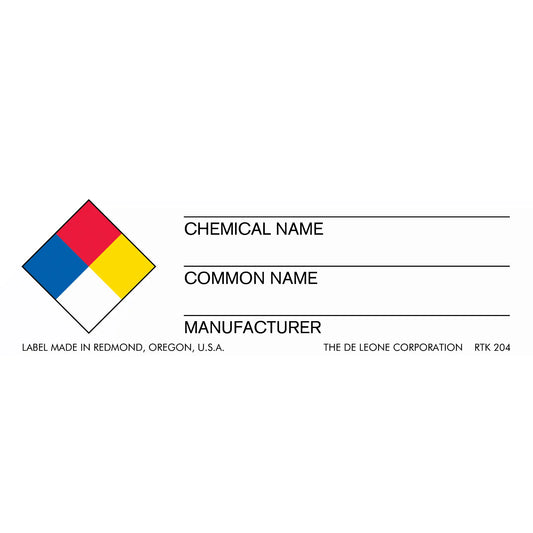

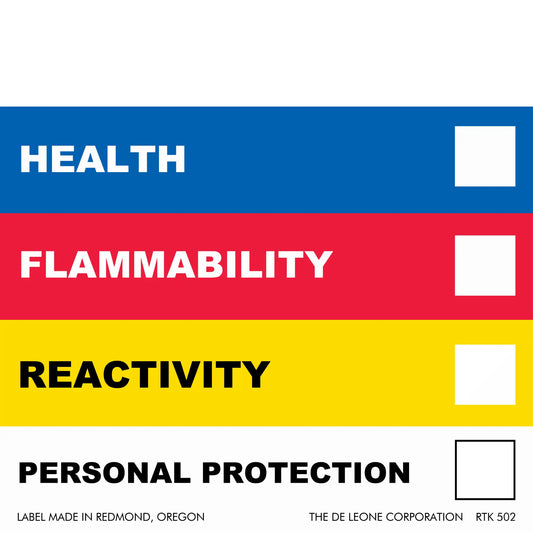
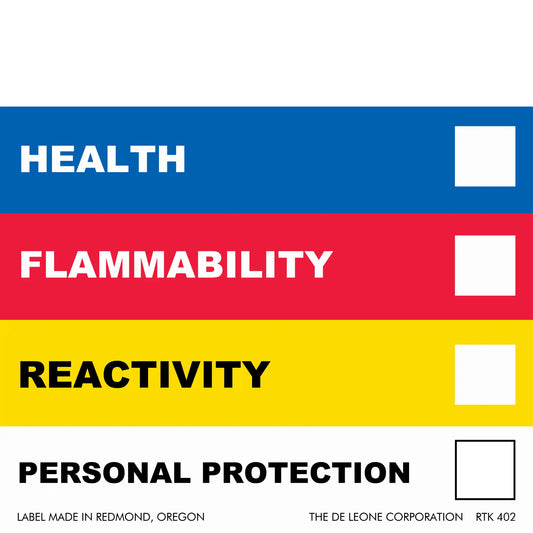
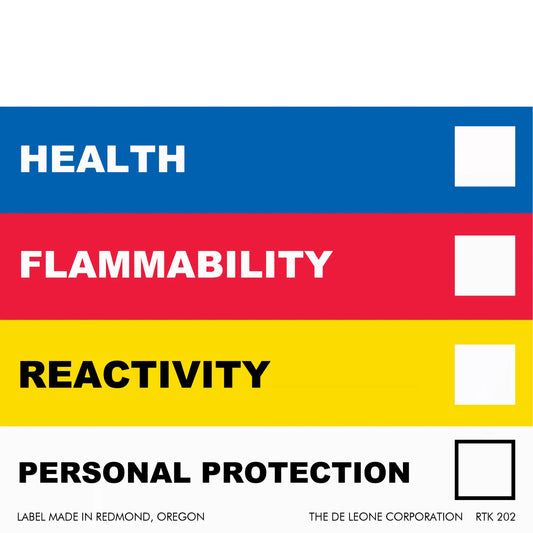
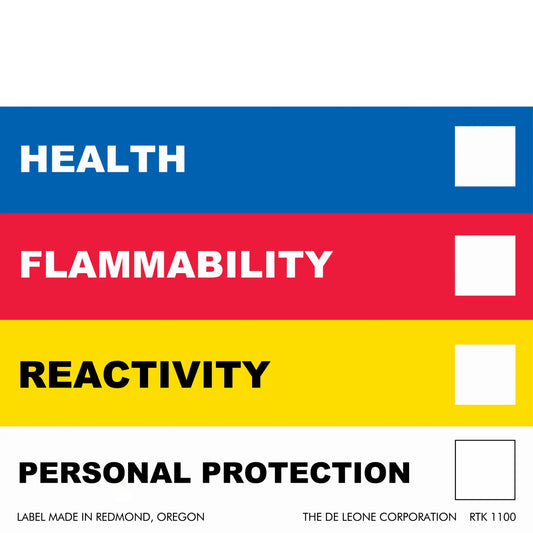
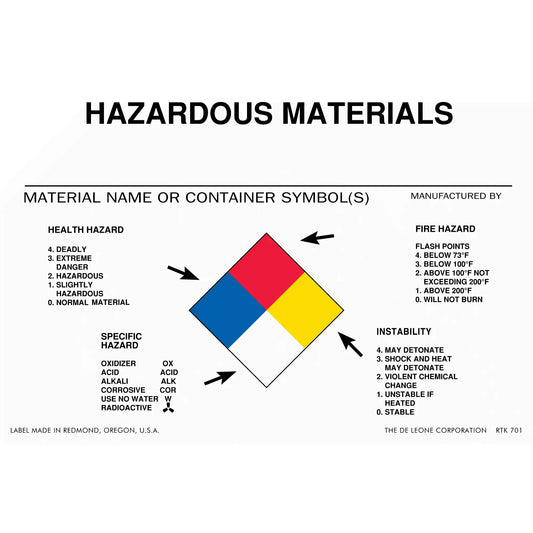
Shop right-to-know labels for marking chemical containers in the workplace. Choose a layout with health, flammability, reactivity and personal protection fields, or one with chemical name, common name and manufacturer fields. Sizes run from 1" x 3" to 8" x 8", on paper or vinyl, in rolls of 500 or packages of 100.
What right-to-know labels are for
Under the OSHA Hazard Communication Standard (29 CFR 1910.1200), each container of a hazardous chemical in the workplace must be labeled. For containers in your own facility, the rule lets you use the product identifier plus words, pictures or symbols that give general information about the hazards, backed by your training program and safety data sheets. Workplace labels must be legible, in English and prominently displayed. Right-to-know labels give you that format: a fill-in label your team completes for each container.
Some states add their own right-to-know laws. In New Jersey, the Department of Health requires private and public employers to label containers with the chemical name and CAS number of the ingredients. Pennsylvania's Worker and Community Right-to-Know Act also includes container-labeling duties. Check your state's rules before you choose a layout.
Choosing a right-to-know label layout
- Hazard rating layout (health, flammability, reactivity, personal protection): 2" x 2" gloss paper, 500/roll, 4" x 4" paper, 500/roll, 4" x 4" vinyl, 500/roll and 8" x 8" vinyl, 100/package for drums and large containers.
- Chemical identity layout (chemical name, common name, manufacturer): 1" x 3" paper, 500/roll for small bottles and jars.
- Hazardous materials label: 4" x 6" vinyl, 100/package.
Paper suits dry, indoor storage. Vinyl suits containers that are washed, handled often, or exposed to moisture. All six labels use a permanent pressure-sensitive adhesive.
Right-to-know label FAQ
What is a right-to-know label?
It is a workplace container label that identifies the chemical inside and gives general hazard information, so employees know what they are handling. It supports the labeling part of an OSHA hazard communication program.
Is a right-to-know label the same as a GHS label?
No. Containers shipped from a manufacturer, importer or distributor need a full GHS-style label: product identifier, signal word, hazard statements, pictograms, precautionary statements, and the supplier's name, address and phone number. A right-to-know label is for containers used inside your workplace, such as secondary containers you fill from a bulk supply.
Should I choose paper or vinyl?
Choose paper for dry storage areas and lower cost per label. Choose vinyl where labels get wet, wiped or handled often.
Compare hazard-rating formats in our HMIS labels and NFPA labels. For DOT shipping labels, see hazardous material labels.